
February 28, 2026
The History of Najaf & Imām ‘Ali’s (a) Ḥaram
- 19th Ramadan 40 AH: Imam ‘Ali (‘a) was struck with a poisonous sword in Masjid al-Kufah while leading Fajr prayers.
- 21st Ramaḍān 40 AH: Imam ‘Alī (‘a) attained shahadah. In accordance with his will, Imam Hasan (a) and Imam Husayn (‘a) secretly buried the Imam in Najaf. His grave remained hidden for many years.
- 135 AH: During the khilafah of Mansur al-‘Abbasi, Imam as-Sadiq (‘a) revealed the location of Imām ‘Ali’s (‘a) grave for the first time.
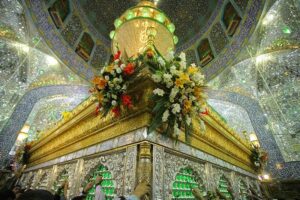
- 165 AH: During the imamah of Imam al-Kazim (a), the first darīh (ornate lattice strucure that encloses the grave) was constructed out of white stone.
- 236 AH: Mutawakkil al-‘Abbasi destroyed the gravesite of Imam ‘Ali (‘a).
- 283 AH: Abul-Hayja, the Shi’ah ruler of Müşil, built a grand dome and carpeted the haram.
287 AH: Muhammad bin Zayd, one of the Shi’ah kings of Ṭabaristan, created a grand structure around the grave of Imam ‘Ali (‘a), including a courtyard with 70 rooms. - 363 AH: The Shi’ah king ‘Aḍud ad-Dawlah expanded the haram and added to its grandeur.
- 436 AH: Shaykh Ṭūsī migrated from Baghdad to Najaf and established the Ḥawza al-‘Ilmiyyah of Najaf.
- 676 AH: ‘Ață Malik Jūwayni built the first plumbing infrastructure for water to reach Najaf.
- 755 AH: Due to a fire, the haram and darīḥ were burnt, along with two Qur’āns handwritten by Imam ‘Ali (‘a).
- 760 AH: The Mogul Il-Khanid Dynasty and their workers rebuilt the haram.
- 1033 AH: Shah ‘Abbas aş-Şafawi performed ziyarah and ordered that the haram, including the dome and the courtyard, be reconstructed and repaired.
- 1047 AH: Shah aş-Şafawi ordered his wazir, Mirzā Taqi Mazandarānī, to expand the courtyards of the haram.
- 1156 AH: Nadir Shah Afshar ordered the bricks on the dome to be replaced with gold.
- 1211 AH: Agha Muḥammad Khan Qäjär gifted a silver ḍarih
- 1236 AH: Fatiḥ ‘Ali Shah performed some repairs and construction for the haram
- 1424 AH: After the fall of Saddam, a great expansion plan was put into place.